
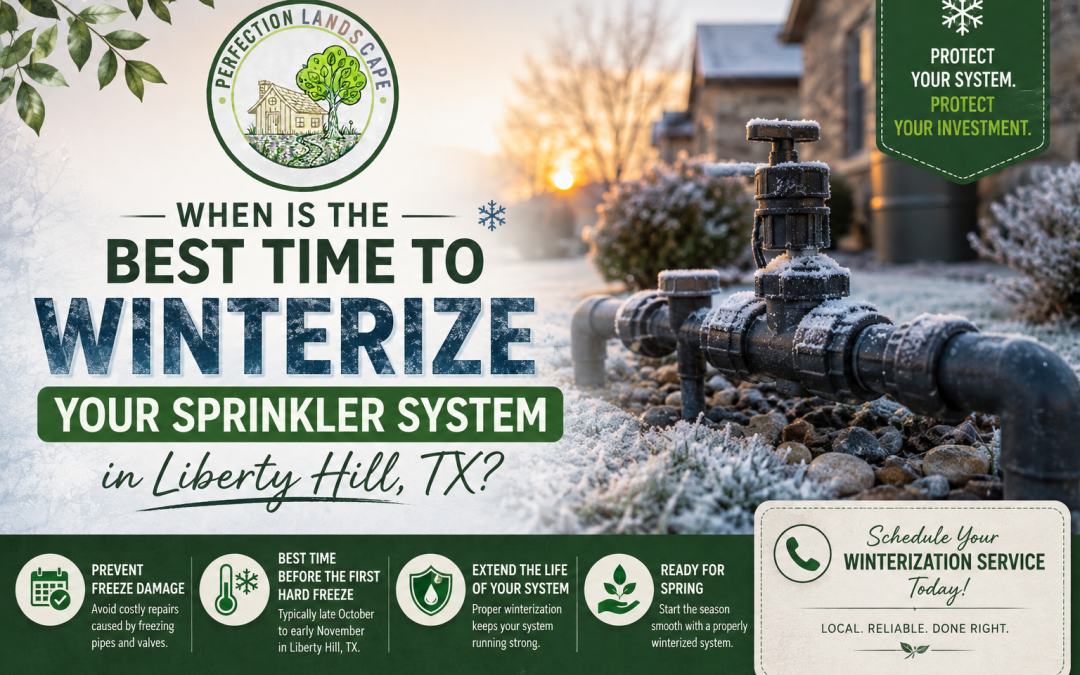
If you have an automatic sprinkler system at your Liberty Hill, Texas property, preparing it for colder weather is an important part of protecting your irrigation investment. While Central Texas does not experience long periods of freezing temperatures every winter, sudden cold snaps can still create problems for irrigation pipes, valves, sprinkler heads, backflow preventers, and other components.
So, when is the best time to winterize your sprinkler system in Liberty Hill, TX? In most cases, the ideal time is before the first significant freeze of the season. Waiting until temperatures have already dropped below freezing can increase the risk of damage, especially when cold weather arrives unexpectedly.
At Perfection Landscape LLC, we understand that every property and irrigation system is different. Since 2011, Corey and Amanda Soirez have built the company around honesty, integrity, and helping homeowners create outdoor spaces they enjoy. Proper seasonal irrigation maintenance is one more way to keep your landscape healthy while protecting the equipment that keeps it watered.
Why Sprinkler Winterization Matters in Liberty Hill
Liberty Hill has a warmer climate than many parts of the country, but that does not mean freezing temperatures can be ignored. Central Texas can experience sudden winter weather that catches homeowners off guard.
Water expands when it freezes. If water remains inside irrigation components and temperatures become cold enough, that expansion can place pressure on pipes, valves, fittings, and other parts of the system.
The exact risk depends on your irrigation layout, equipment, soil conditions, pipe location, and weather exposure. Systems with exposed components may be particularly vulnerable during a hard freeze.
Winterizing your sprinkler system helps reduce the amount of water left in vulnerable components before freezing weather arrives. It can also give you an opportunity to inspect the system for leaks, damaged sprinkler heads, faulty valves, or other problems before the next watering season.
When Should You Winterize a Sprinkler System in Liberty Hill?
The best time to winterize your sprinkler system is generally before the first hard freeze is expected.
In Liberty Hill, winter weather can be unpredictable. A mild fall can quickly transition into a cold period, which means homeowners should not necessarily wait until the weather feels consistently cold.
A good approach is to begin thinking about winterization during late fall. Monitor the local weather forecast and make sure your irrigation system is prepared before a significant freeze arrives.
If your property has sensitive irrigation components or you have experienced freeze-related irrigation damage in previous years, earlier preparation may be appropriate.
The goal is simple: do not wait until freezing weather is already happening.
What Happens During Sprinkler Winterization?
Winterization is more than simply turning off the irrigation controller.
The process depends on the type of irrigation system installed on your property. A professional can inspect the system and determine the appropriate approach based on its components.
One important step is shutting down the irrigation controller or placing the system into the appropriate seasonal setting. This prevents unnecessary watering during colder weather and helps prepare the system for the dormant period.
Water may also need to be removed from portions of the irrigation system that are vulnerable to freezing. The method used depends on the system design and components.
A professional inspection can also identify issues such as leaking valves, broken sprinkler heads, damaged pipes, clogged heads, or other irrigation problems.
Taking care of these issues before winter can help prevent a small problem from becoming a larger repair later.
Why Liberty Hill Weather Makes Preparation Important
Central Texas weather can change quickly. One week may feel mild while the next brings freezing temperatures.
This is one reason seasonal irrigation preparation should not be based only on average temperatures. A homeowner may have a sprinkler system that works perfectly throughout most of the year but still experience problems when an unexpected freeze arrives.
Properties can also have different levels of exposure. Irrigation components located near exposed areas may experience different conditions from components protected by landscaping, structures, or soil.
Because every irrigation system is different, a property-specific inspection can be useful when determining how much winter preparation is needed.
Signs Your Sprinkler System May Need Attention Before Winter
Winterization is also a good time to look for existing irrigation problems.
One common warning sign is a sprinkler head that continues leaking after the system shuts off. This may indicate a valve or sprinkler component problem.
Another sign is uneven water distribution. If some areas of your lawn receive significantly more or less water than others, clogged heads, damaged components, pressure problems, or system design issues may be involved.
You should also pay attention to unusually wet areas of your lawn. Persistent wet spots can sometimes indicate an underground leak.
Broken sprinkler heads are another common issue. Lawn equipment, vehicles, foot traffic, landscaping work, and normal wear can damage irrigation components over time.
Addressing these problems before winter can make it easier to restart your system when warmer weather returns.
Should You Turn Off Your Sprinkler System in Winter?
In many situations, homeowners reduce or stop regular irrigation during the colder months. However, simply turning off the controller is not the same thing as winterizing the irrigation system.
Turning off the controller stops scheduled watering, but water may still remain inside parts of the irrigation system.
The appropriate winter setting depends on your landscape, irrigation equipment, plants, and expected weather conditions.
Some plants may still require occasional watering during dry periods, particularly newly planted landscapes. For this reason, winter irrigation should be considered as part of the overall landscape maintenance plan rather than simply following a one-size-fits-all schedule.
What About Backflow Preventers?
Backflow prevention equipment deserves particular attention because it can contain water and may be exposed to cold temperatures.
The correct protection method depends on the specific backflow device and irrigation configuration. Improper handling can potentially damage equipment.
If you are not familiar with your irrigation system, it is better to have a qualified professional inspect the components rather than guessing about what needs to be drained, isolated, or protected.
What Happens If You Wait Too Long?
The biggest problem with waiting is that Central Texas freezes can sometimes arrive unexpectedly.
If a hard freeze occurs before your irrigation system is prepared, vulnerable components may be exposed to freezing conditions.
Even if your system does not experience visible damage, winter is a good time to identify problems that could affect performance when regular irrigation begins again.
Preparing ahead of time gives you more opportunity to address irrigation repairs before they interfere with your landscape maintenance schedule.
Winterization Is Part of Year-Round Landscape Care
Your irrigation system does not work independently from the rest of your landscape.
Healthy lawns, flowerbeds, shrubs, trees, and other plants depend on appropriate watering throughout the year. That means irrigation maintenance should be considered alongside mowing, fertilization, planting, weed control, and other landscape services.
At Perfection Landscape LLC, the goal is to help homeowners keep their yards functional, attractive, and enjoyable throughout the seasons.
Because the company was founded in 2011 by Corey and Amanda Soirez, Perfection Landscape LLC has experience working with homeowners who want dependable outdoor property care.
Preparing for Spring After Winter
Winterization is not the end of irrigation maintenance. When warmer weather returns, your sprinkler system should be inspected before regular watering resumes.
Look for broken sprinkler heads, leaks, clogged nozzles, damaged pipes, and areas that are not receiving adequate water.
You should also check whether your irrigation schedule still matches your landscape’s needs. A watering schedule that worked during one season may not be appropriate for another.
Spring is an excellent time to make necessary adjustments before lawns and plants enter their active growing period.
When Should You Call a Professional?
If you know how your irrigation system works and understand its components, you may be able to handle some basic seasonal adjustments yourself. However, irrigation systems can contain underground pipes, valves, backflow equipment, and other components that are not always easy to evaluate.
Consider professional help if you notice leaks, broken sprinkler heads, unusual water pressure, standing water, damaged irrigation components, or areas of your landscape that are not receiving adequate coverage.
Professional service can also be helpful if you are unsure whether your system has been properly prepared for freezing weather.
Keep Your Liberty Hill Irrigation System Ready
Winterization is a relatively small part of landscape maintenance, but it can play an important role in protecting your irrigation system.
For Liberty Hill homeowners, the key is preparation. Do not wait for freezing weather to arrive before thinking about your sprinkler system. Start preparing in late fall, monitor the forecast, inspect vulnerable components, and address irrigation problems before they become more serious.
If you need help with irrigation maintenance or sprinkler services, Perfection Landscape LLC can evaluate your property and provide guidance based on your specific landscape and irrigation system.
Frequently Asked Questions
When is the best time to winterize sprinklers in Liberty Hill, TX?
The best time is generally before the first significant freeze of the season. Because Central Texas weather can change quickly, preparing in late fall and monitoring the forecast can help you avoid waiting until freezing temperatures arrive.
Does turning off my sprinkler controller winterize the system?
No. Turning off the controller stops scheduled irrigation, but it does not necessarily remove water from vulnerable components. Proper winterization depends on the design and equipment used in your irrigation system.
Can freezing weather damage an irrigation system?
Yes. Water left inside vulnerable irrigation components can freeze and expand, potentially causing damage. The amount of risk depends on the system and the severity of the weather.
Should I inspect my sprinkler system again in spring?
Yes. Before returning to regular irrigation, inspect the system for leaks, broken heads, clogged components, and uneven watering. Seasonal adjustments may also be needed.
Does Perfection Landscape LLC provide irrigation services?
Perfection Landscape LLC provides landscape and irrigation-related services for properties in the Liberty Hill area. Homeowners can contact the company to discuss their specific needs and request a free estimate.
Protect Your Sprinkler System Before the Next Freeze
Don’t wait until freezing weather arrives to think about your irrigation system. Preparing ahead of time can help protect vulnerable components and make it easier to restart your landscape irrigation when warmer weather returns.
Call or text Perfection Landscape LLC at 512-745-9028 for a free quote.
You can also email CoreyPerfectionLandscape@yahoo.com to discuss your landscaping or irrigation needs.